

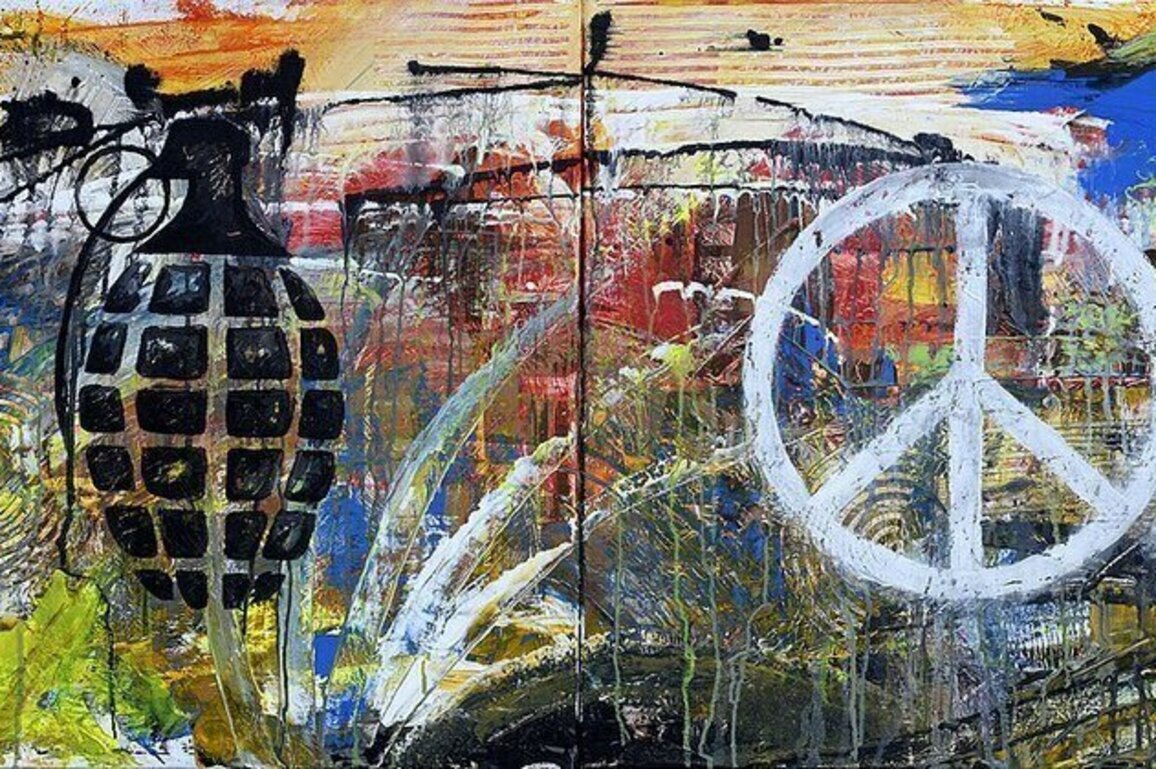
One of the deepest causes of suffering in todays world is human contradiction. Wars, economic inequality, injustice, exploitation, psychological violence, and social fragmentation are not natural disasters. They are the result of human decisions and behaviors. Natural catastrophes certainly exist, but humanity already possesses enough knowledge and resources to significantly reduce much of their impact when there is collective will to act. The tragedy is not simply that suffering exists, but that so much of it continues unnecessarily because human priorities remain disordered.
At the root of many conflicts lies a contradiction between what we claim to value and how we actually live. Contradiction appears when thoughts, feelings, and actions move in opposing directions when what a person or society says, believes, and does no longer forms a coherent whole. A nation may speak about peace while investing heavily in war. A religion may preach compassion while justifying exclusion or discrimination. A person may speak about responsibility while neglecting those closest to them. These contradictions generate suffering both personally and socially. Over time, unresolved contradictions become normalized and rationalized until entire systems operate around them without questioning their consequences.
If we truly want to reduce conflict and suffering, we must learn to recognize and overcome contradiction within ourselves and within our institutions. The idea sounds simple, but the work is difficult. Religions have long attempted to address this through ethical teachings and moral principles. Democracies and systems of justice seek to create social coherence through laws and institutions. Yet again and again, humanity establishes noble ideals while simultaneously building systems that undermine them.
How can a democratic society committed to peace continue to depend on military power and violence as the ultimate guarantee of security? In the United States, the same individual entrusted with leading a democracy grounded in peaceful ideals also serves as Commander in Chief of the most powerful military force in history. This is not merely a political paradox it reflects a contradiction embedded within modern democratic structures themselves. We can see the consequences clearly in regions such as the Middle East, where decades of diplomatic language about peace and stability have unfolded alongside repeated military interventions and continuing cycles of violence.
The same contradiction can be found within religion. How can someone claim to follow teachings centered on love, forgiveness, and care for the vulnerable while supporting nuclear weapons capable of annihilating civilian populations, or policies that separate families and deny refuge to people fleeing violence? These are uncomfortable questions, but religions and believers cannot avoid them indefinitely without emptying their own teachings of meaning.
One of the clearest global examples of contradiction is found in the structure of the United Nations itself. An institution created to preserve peace remains largely dominated by the nations possessing the worlds most destructive nuclear arsenals. The permanent members of the Security Council are also the major military powers. This does not erase the UNs importance, but it reveals something profound about humanitys current stage of development: we continue organizing global power around the capacity for mass destruction while simultaneously claiming to seek peace. A more coherent international system would give far greater weight to nations that have consciously organized themselves around peaceful and nuclear-free principles. Costa Rica, which abolished its military, offers one example. South Americas declaration as a nuclear-weapon-free zone offers another. These are not nave gestures, but deliberate attempts to resolve conflict without relying on violence.
These contradictions are not only institutional or geopolitical; they also shape everyday life. In one of the wealthiest societies in human history, millions of children continue to live in poverty while enormous concentrations of wealth expand without limit. Modern societies often attempt to manage the suffering produced by these contradictions by creating institutions designed to alleviate the very problems their systems continue generating. Charitable organizations may temporarily relieve suffering, but charity alone cannot resolve the deeper contradictions that continuously reproduce inequality and insecurity. Too often, societies celebrate generosity while avoiding more difficult questions about the structures creating suffering in the first place.
This contradiction also lives within each of us. Most people genuinely believe in justice, opportunity, and human dignity. Yet many of the decisions shaping our daily lives where we live, what we buy, who we support, what we tolerate are organized primarily around economic pressure, fear, and self-protection. We say we value human beings, yet we reduce nearly everything to economic value. We speak of equity while protecting our own advantages. We claim to believe in opportunity while building barriers around it. This is not simply individual hypocrisy; it reflects the difficulty of living within systems whose actual values often contradict their stated ideals. The suffering produced by this contradiction is real. It affects not only those who are excluded or marginalized, but also those who sense, somewhere within themselves, that they are living against their own deepest values.
And yet human history also contains examples of movement toward greater coherence moments when societies consciously chose reconciliation over revenge, dialogue over violence, and human dignity over domination. After apartheid in South Africa, the country faced enormous tension and the real possibility of widespread retaliation. Instead of embracing revenge, leaders such as Nelson Mandela and Desmond Tutu helped guide the nation toward dialogue and reconciliation through the Truth and Reconciliation Commission. This was not a nave decision, but a courageous one made with full awareness of the pain involved. In the same way, Costa Ricas abolition of its military and South Americas commitment to becoming a nuclear-weapon-free zone represent conscious efforts to reduce contradiction and orient society toward peace.
Perhaps this is where genuine human progress begins: when people and societies increasingly strive to think, feel, and act in the same direction, while treating others as they themselves wish to be treated. Such coherence reduces suffering and opens the possibility for profound social transformation. It is not the same to live directed toward overcoming contradiction as it is to simply adapt to contradictory systems. The consequences of those choices extend far beyond the individual; they shape communities, institutions, generations, and ultimately the future of humanity itself.
David Andersson