

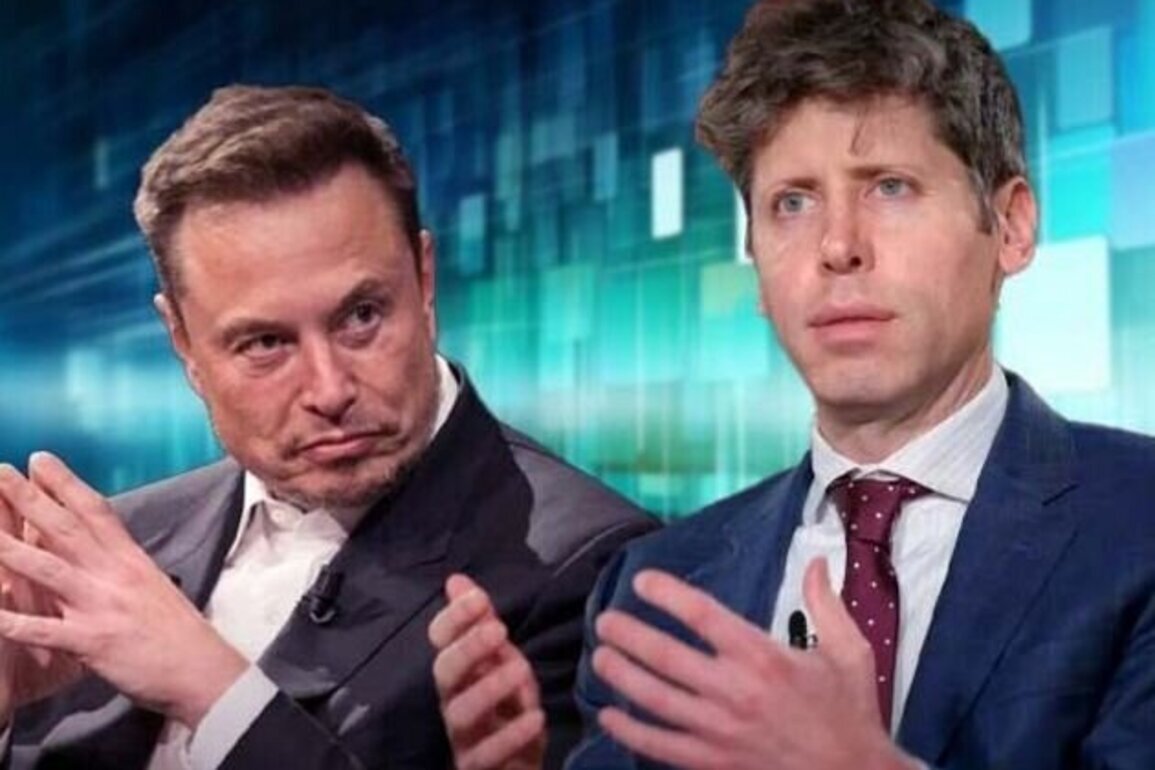
The legal clash between Elon Musk and OpenAI exposes the profit-driven scramble shaping the future of artificial intelligence, writes DrBinoy Kampmark.
THEY ARE A disagreeable bunch, with disagreeable ideas to match.
The querulous brats behind the drive for technological servility and plugged-in stupidity were always going to scrap over which dystopian vision they most prefer.Elon Muskthought he was onto something, houndingOpenAIand its current CEO,Sam Altman, forsupposedly betrayingone of those visions.
In his US$150 billion (AU$211 billion) legal action, Musk alleged that Altman and OpenAI presidentGreg Brockmandeceived him into investing in the company in its initial stages when salad green altruism was modish and humanity mattered.
The litigation was a prong in abroader strategyto unseat Altman from OpenAI, sabotage the companys US$852 billion (AU$1.2 trillion) restructuring into a public benefit corporation and direct US$134 billion (AU$188.5 billion) to OpenAIs non-profit foundation.
The deception centred on maintaining OpenAI as a non-profit entity and pursuing artificial intelligence (AI) ventures in ways beneficial to humanity. (When the tech brats have a stab at humour, they go in hard.) According to Musk, OpenAI had effectively stolen a charity. (Between 2015 and 2017, he had personally put US$44 million (AU$62 million) into OpenAI, funds, he argues, that were essentially misappropriated when the company sloughed its non-profit skin.)
From Starlink to the state: When platform monopolies become political powerAs digital infrastructure concentrates in a handful of tech giants, private platform monopolies are beginning to wield power once reserved for states.
In anintroductory overviewof the company from December 2015, the company describes itself as a non-profit artificial intelligence research company with the object of advancing digital intelligence in a way that is most likely to benefit humanity as a whole, unconstrained by a need to generate financial return. Since our research is free from financial obligations, we can better focus on a positive human impact.
How things change. On 18 May, a mere two hours were needed for a nine-member jury in Oakland, California, to unanimously find against Musk, basing their decision on that most technical of grounds: the statute of limitations. This left two civil claims breach of charitable trust and unjust enrichment untested.
Having left OpenAIs board in 2018, Musk dithered till February 2024 to file suit. Musk claimed to have only discovered the companys abandonment of its non-profit mission in 2022, when Microsoft showed its interest with an investment of US$10 billion (AU$14.7 billion). OpenAIs legal teamarguedthat the pertinent events the creation of a for-profit subsidiary in 2019, for instance, and Microsofts initial injection of US$1 billion (AU$1.4 billion) that same year were already matters of common knowledge.
Time on the statute of limitations was running well before 2022.
U.S. District JudgeYvonne Gonzalez Rogersof the Northern District of Californiasaw no reasonto question the jurys conclusion:
The trial was impressively ugly and amounted to an insult to the stout intelligence of the public whose welfare both parties claim to be protecting. The legal representatives from both sides jousted over respective views on AI and the credibility of the disputants. Musks lawyer,Steven Molo,pressedjurors to consider that several witnesses, including former OpenAI chief scientistIlya Sutskever, doubted Altmans candour, going so far as to find him mendacious.
Why Elon Musks $44 billion payday should worry AustraliansWhen it comes to leadership, the myth of the great man liveson because it flatters and serves the interests of the elite.
Altman had alsoconcededunder cross-examination that he told the occasional lie. Sam Altmans credibility is directly at issue, Molo crowed. If you dont believe him, they cannot win.
OpenAI, Musk accusingly asserted, had wrongfully attempted to enrich investors and insiders at the expense of the non-profit. Along the way, it had failed to make AI safety a matter central to its operations. Microsoft, he further argued, had always known that OpenAI cared more about money than altruism.
A personal journal entry penned by Brockman in November 2017 was also instructive,baldly revealingthat OpenAI could not assert fidelity to its non-profit status if it intended to become a benefit corporation months later. So it came to pass that Altman, Brockman and OpenAI were accused of the very same temptations, frailties and indifference to safety found in Musks own conduct.
On the issue of safety and welfare, Musks ownxAI, acquired by the space and rocket companySpaceX, which is also part of the South Africans fiefdom of misrule, hasdrawn the attentionof the European Commission and theUK watchdogOfcomover Grok, a product that has been used to create sexualised images. The combination arising from xAI and SpaceX could lead to an initial public offering that would surpass OpenAI in size, which sinks the scurrilous suggestion of altruism. Provided things go smoothly, the worlds first trillionaire might arise.
OpenAI was hardly going to leave Musks feeling of tech purity unchallenged. It was he, not OpenAI, who saw the shimmering dollar signs. Going back to 2017, he had floated the idea of a for-profit subsidiary with one caveat: he would have exclusive control. Failing this, he left the board in a huff.
OpenAIs attorney William Savittsuggestedthat Musk, having failed to get his way at OpenAI, filed his lawsuit only after establishing his own competing AI company in 2023. But most saliently, he waited too long to claim breaches of the founding agreement regarding the building of safe artificial intelligence for the benefit of humanity. Mr Musk may have the Midas touch in some areas, but not in AI, claimed Savitt.
The decision will boost OpenAIs predatory reflexes. The non-profit status in this field has been found wanting and the scramble for profits has been given much encouragement in this most unprincipled of frontiers.
Hell hath no fury like a bro scorned: Trump, Musk and alpha masculinityThe bromance is over between Donald Trumpand Elon Musk but the real loser of their feud is democracy.
Sarah Krepsof the Tech Policy Institute at Cornell Universityopines:
This was by no means the first time Musk had taken to throwing a brief of anger against OpenAI.
In March 2024, showing that intelligence can be authentically artificial, Muskfiled a lawsuitciting a contract violation of a contract that did not exist. Using the misguided legal offices ofIrell & Manellathe same firm thaterroneously claimedon behalf ofPETAthat a monkey could hold copyright Musk pursued whatTechdirtsMike Masnickappropriatelycalleda vibes based action.
Masnick wrote:
This insurmountable logic led Musk to abandon the lawsuit in June that year.
For Musk, the wells of indignation run deep. This is a man inthe habit of losing or settling claims, be it with former Twitter executives and employees of the social platform now known as X, losing to investors in that same company for misleading public statements made during his untidy, often chaotic takeover, or having his lawsuit promptly dismissed against advertisers that exited that troubled platform.
While such behaviour should draw scorn, those drawing benefit from Musk's litigious pathologies lawyers, in the main can only be grateful.
A credulousShubha Ghosh, lawyer and law academic at Syracuse University,says:
Wrong, certainly, on the first count.
DrBinoy Kampmarkwas a Cambridge Scholar and is a lecturer atRMIT University. You can follow Dr Kampmark@BKampmark.
Related Articles
- Europe must stand firm against the unchecked power of U.S. digital giants
- CARTOONS: Mark David is maximising efficiency
- Elon Musk's plan to take over America revealed
- CARTOONS: Elon's lapdog is in the driver's seat
- Musk's controversial gesture: The anatomy of a social media frenzy