

E-International Relations
Download PDF
Apr 6 2026
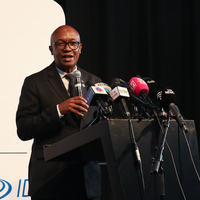
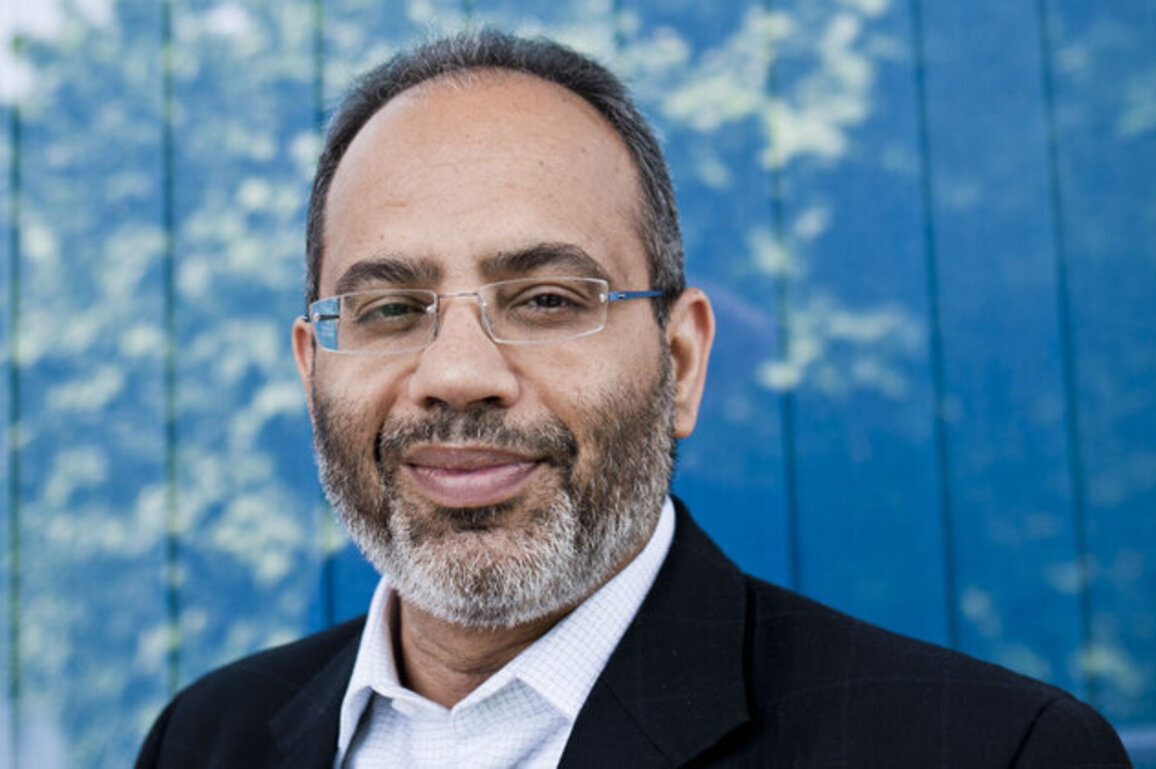
Image by Carlos LopesCarlos Lopes is Honorary Professor at the Nelson Mandela School of Public Governance, University of Cape Town, and Associate Fellow at Chatham House, London. He has also been a Fellow at the Oxford Martin School, University of Oxford, and serves as Senior Advisor at Macro-Advisory Partners. He has served on several international commissions and advisory boards, including the Global Commission for the Economy and Climate and the Global Commission for the Future of Work. He currently serves on the Board of Directors of the World Resources Institute and the Board of the ClimateWorks Foundation and is Chair of the African Climate Foundation. He is also a member of the United Nations Committee for Development Policy.
He previously served as Chair of the Lisbon University Institute (20092017), Affiliate Professor at Sciences Po, Paris (20182024), and Visiting Professor at the cole des Hautes tudes en Sciences Sociales. At the United Nations, he held several senior positions, including Executive Secretary of the Economic Commission for Africa (20122016), as well as leadership roles at the United Nations Institute for Training and Research and the UN System Staff College. Earlier, he served as UN Assistant Secretary-General and Political Director to Secretary-General Kofi Annan. He was appointed African Union High Representative for Partnerships with Europe in 2018 and served on the African Union Reform Team led by President Paul Kagame (20162024). More of his writings and reflections can be found at www.africacheetah.run.
Where do you see the most exciting research/debates happening in your field?
I see the most dynamic debates emerging around how Africa positions itself within a world where the certainties of globalization are breaking down. My work has long argued that Africa cannot rely on the benevolence of others or on outdated prescriptions anchored in aid, comparative advantage, or externally imposed best practices. What excites me now is how research is catching up to this reality: the recognition that industrial policy is back, that strategic autonomy matters, and that Africa must leverage its demographics and resource base to bargain differently in global fora.
There is a particularly rich debate around climate and development finance. The old model assumed Africa would be a passive recipient of aid flows. But the structural gap in adaptation and mitigation financing has exposed the fragility of that model. Scholars and practitioners are now looking at instruments such as regulated carbon markets, regional financial platforms, and reforms of the international financial architecture. These debates resonate with my own proposals for an African Domestic Capital Mobilization Compact and for granting African multilateral financial institutions preferred creditor status moves that would shift the balance of financial sovereignty decisively.
How has the way you understand the world changed over time, and what (or who) prompted the most significant shifts in your thinking?
When I began my career, the intellectual climate was dominated by the Washington Consensus. Development was presented as a technical matter of adopting reforms and liberalizing markets. My experience working within and alongside multilateral institutions taught me that these prescriptions were not neutralthey were deeply political and often served to reinforce Africas marginal position in the global economy. The global financial crisis of 2008, the climate crisis, and the pandemic were inflection points for me. They exposed not just the hypocrisy of global governancewhere rules apply to some and not to othersbut also the need for a new development narrative. Influences such as Amlcar Cabral and Samir Amin remain important, but equally significant were the negotiations I led as African Union High Representative. Being at the table with European counterparts, seeing the asymmetry of discourse and power firsthand, confirmed that Africas challenge is not simply to seek inclusion but to renegotiate the terms of engagement.
In Chapter 2 ofAfrica in Transformation, you argue that political change is essential for Africas transformation. Rwanda is often cited in academic debates (Golooba-Mutebi & Booth, 2013; Friedman, 2011) as a case of strong state-led development but also criticised for its limited political freedoms. Do you see such models as a viable path for transformation?
Rwanda demonstrates the importance of state capacity, but it also illustrates the limits of models that emerge from complex post-conflict situations. My argument is that transformation is political, not merely technocratic. Without legitimacy, efficiency can quickly become fragility. Rwanda has made impressive gains in health, infrastructure, and governance indicators, but the question is whether such a model can be generalized across the continent without risking long-term stability.
Africas transformation cannot rest on exceptions. It must rest on building institutions that combine effectiveness with inclusivity. The trade-off often presented between development first, democracy later is misleading. What matters is whether states are able to mobilize collective energy for transformation, channel it into productive investment, and do so in ways that expand political space rather than narrow it.
Do you believe democracy can emerge after development, or must political freedoms come first to ensure lasting transformation?
This sequencing debate is often framed in binary terms that do not reflect Africas realities. Development without participation risks creating brittle structures that collapse under pressure. Political freedoms without material progress risk being hollow promises. What Africa requires is not to mimic external templates but to reconcile the two in context-specific ways. The lesson from history is that authoritarian growth spurts often run into legitimacy crises. Likewise, premature liberalization without addressing inequality and jobs can undermine democratic credibility. Africas challenge is to weave these trajectories together: investing in transformation while broadening participation. This is why I emphasize structural transformation as the foundation for lasting democracy, and democracy as the safeguard for sustainable transformation.
InAfrica in Transformationyou point out that much of Africas economy is informal, making taxation and redistribution difficult. What practical steps can governments take to expand fiscal capacity in countries where many people rely on informality to survive?
In Africa in Transformation, I described informality not as a pathology but as a symptom of exclusion. It accounts for the majority of livelihoods on the continent. Any attempt to expand fiscal capacity must therefore start with understanding that informality is rational under existing constraints.The way forward is to make formalization beneficial rather than punitive. That means using digital finance to reduce transaction costs, creating off-take mechanisms that stabilize prices for small producers, and designing social protection that encourages tax participation. It also means regional approaches: for example, pooling resources through continental financial platforms to support countries in building tax capacity. Fiscal sovereignty is not just about collecting more revenueit is about creating trust that revenues are used transparently to deliver services.
InThe Self-Deception Trap, you describe foreign aid as the fruit of the poisoned tree. Do you believe aid can ever be reformed to support transformation, or is it inherently a flawed framework?
My argument in The Self-Deception Trap is that aid reproduces dependency because it is rooted in asymmetry and charity. Even when well-intentioned, it comes with volatility, conditionalities, and a narrative that Africa is a recipient rather than an agent. This is why I call it the fruit of the poisoned tree. Can aid be reformed? It can be redirected, but it will never be sufficient to drive transformation. The focus must be on domestic capital mobilization, reform of global rules on debt and credit rating, and regional integration. Aid can play a catalytic role when subordinated to African agendas, but the trap is when it becomes the agenda itself. The deeper reform lies not in aid management but in creating an African financial architecture that reduces reliance on aid altogether.
Inchapter 5you describe many NGO projects as trapped in the capitalism of mercy. Can NGOs play a constructive role in Africas transformation without reinforcing dependency, and if so, under what conditions?
NGOs occupy an ambiguous space. Too often, they fragment development efforts, respond to donor priorities rather than local needs, and substitute for states in ways that weaken sovereignty. This is what I call the capitalism of mercya system that thrives on permanent crisis and reproduces the need for itself. Yet NGOs can be allies if they focus on strengthening local capacity, amplifying marginalized voices, and pushing for structural reforms rather than stop-gap projects. Their constructive role lies not in service delivery per se, but in facilitating citizen participation, fostering accountability, and building pressure for systemic change.
You argue that the doctrine of comparative advantage has locked Africa into commodity dependence, and inchapter 8you describe EU trade frameworks as a free trade fantasy that reinforces this trap. What stance should the African Continental Free Trade Area (AfCFTA) take to escape both the ideology and the practice of dependency?
Comparative advantage has trapped Africa in commodity dependence. It is a doctrine that reflects 19th-century economics, not the realities of the 21st century. Europes frameworks, which I call free trade fantasies, often entrench these asymmetries by rewarding raw material exports and penalizing industrial policy. The AfCFTA must break with this legacy. It should not be judged solely on tariff schedules, but on whether it enables African countries to coordinate industrial strategies, build cross-border infrastructure, and scale up productive capacities. Integration must be transformative, not just commercial. That means Africa using the AfCFTA as a platform to negotiate collectively with external partners, resisting the trap of bilateral fragmentation.
African agency is central to your writings. What does true agency look like in negotiations with Europe or China, and what would it take to achieve it?
Agency is at the heart of my writings. True agency means Africa negotiating from a position of clarity and collective strength. With Europe, that means challenging paternalistic frameworks that treat Africa as a junior partner. With China, it means resisting the narrative of a purely benevolent SouthSouth solidarity and instead setting clear terms that serve Africas long-term ambitions. Agency is not a sloganit is institutional. It requires stronger continental mechanisms to coordinate bargaining positions, investment in knowledge systems that reduce reliance on external expertise, and the courage to walk away from deals that do not align with African priorities. Agency is about shifting the conversation from what others will give to what Africa demands and contributes.
What is the most important advice you could give to young scholars of International Relations?
My advice is to resist the temptation to study Africa only through borrowed lenses. Too much scholarship on Africa is derivative, repeating tropes of fragility, conflict, or victimhood. Yet Africa is also a laboratory of innovationin finance, technology, and social movements. Young scholars should engage with African intellectual traditions, from Amilcar Cabral, Frantz Fanon, Peter Ekueh, Claude Ake, Samir Amin to contemporary thinkers, and treat African agency seriously. They should also be willing to challenge orthodoxies, whether about aid, trade, or governance. Above all, they should cultivate critical optimism: the belief that Africas transformation is possible, but only if we confront structural constraints honestly and think beyond conventional wisdom.
Further Reading on E-International Relations
- Interview Olukayode Bakare
- Interview Max Koffi
- Interview Lulama Smuts Ngonyama
- Interview Alice Hill
- Interview Joshua Busby
- Interview Leonardo Martinez-Diaz
Giorgia Casale
TagsAfricaDemocracyDevelopmentFiscal SovereigntyNGOsStrategic Autonomy