

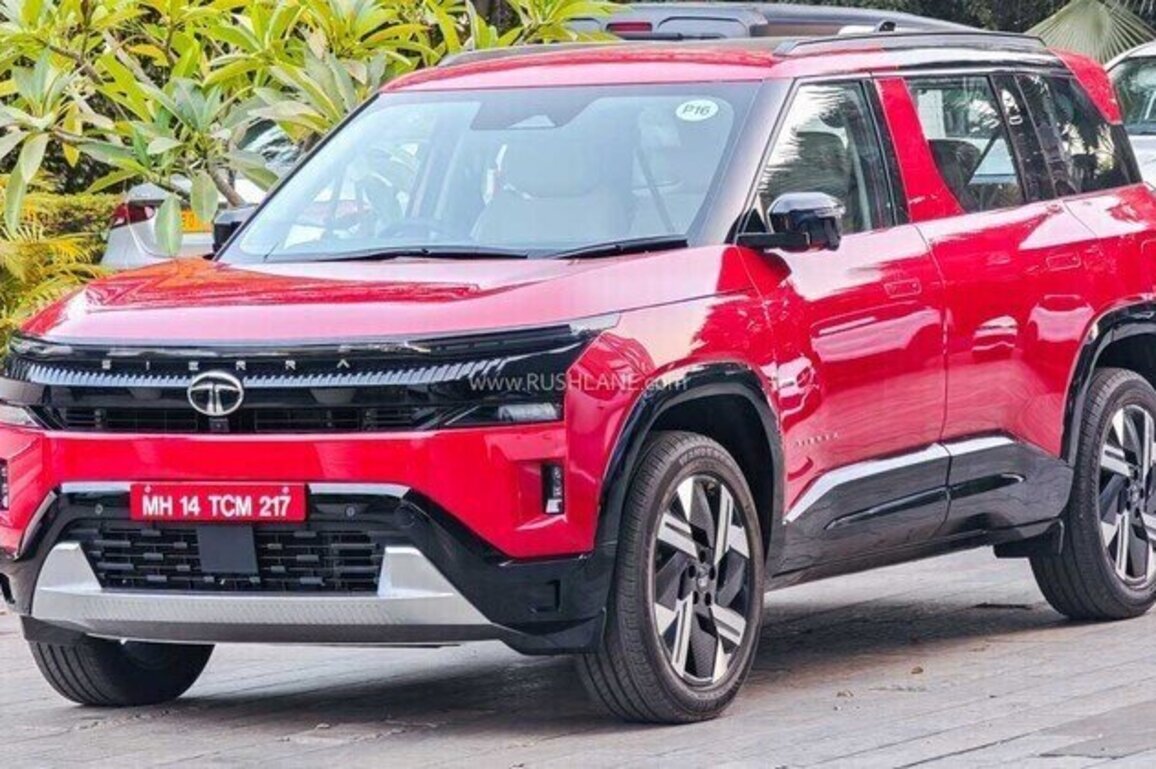
has made a big impact with its distinctive design, premium features and range of powertrain options. More than 70,000 orders were received within 24 hours of the booking window opening in December 2025. Tata has now revealed that total bookings have crossed the 1 lakh mark. To ensure prompt deliveries, the company has stepped up focus on increasing production. Lets check out the details.
Sierra production optimization, supply side challenges
During the media call for discussing Q3 FY26 performance, Shailesh Chandra, Managing Director and Chief Executive Officer of Tata Motors PV, confirmed that bookings for Sierra are now in six-digit numbers. From a demand phase, the focus has now shifted to production optimization. Tata will be looking to ensure prompt deliveries for a better overall experience and to prevent booking cancellations.
Even though Tata has the production capacity to meet the massive demand for Sierra, there are challenges on the supply side. The entire auto industry in India is currently facing supply side constraints. This is largely because monthly PV volumes have increased significantly since GST reforms were introduced. Earlier, the PV volumes used to be around 3.50 lakh units per month. This has increased to 4.20 lakh to 4.50 lakh units per month.
Since this major shift has occurred in a short period of time, suppliers will need time to ramp-up their logistics and production. In the case of Sierra, the company is facing supplier side constraints for specific items like castings and some powertrain parts. However, Tata is working with its suppliers to resolve the bottlenecks in the shortest possible time. Shailesh Chandra also revealed that Tata is working on the electric version of the Sierra. It is planned for launch in Q1 of FY 2027.
New
In the coming months, Tata is aiming to increase Sierras production to around 15,000 units per month. Assuming that supply side constraints are removed, Sierras production could reach around 1.50 lakh units per annum. Sierra is manufactured at the same plant where theNexonis made and both have high demand. Tata will focus on capacity optimization to boost production and ensure faster deliveries.
FTAs open new export opportunities
While Tata will continue to focus on meeting domestic demand, new export opportunities are being actively assessed. This is even more relevant from a long-term perspective. New export opportunities are expected to emerge, as India has signed trade deals with multiple countries. Moreover, a number of trade deals are currently being negotiated.
New
Tata is looking to increase its global footprint in a phased manner. The initial focus will be on right-hand-drive markets. In 2025, Tata re-entered the South African market with products like the Tiago,Punch, Curvv and Harrier. The company is examining opportunities in the UK and Europe, especially for its electric vehicles. Tata will probably finalize its game plan once the fine print of India-EU free trade agreement is in place.