

When the U.S. sanctions international judges to shield Israel, power decides who is accountable, not law.Hassan Elbialireports.
SINCE RETURNING to office in January 2025, U.S. President Donald Trump has launched an aggressive campaign todismantleinternational legal accountability.
His administration imposedsweepingsanctions on International Criminal Court (ICC) personnel investigating Israeli conduct in Gaza not just a policy disagreement, but an assault on the institution itself.
The Trump Administration sanctioned judges, prosecutors, and Palestinian human rights organisations that cooperated with ICC investigations. By December 2025, nine ICC staff members faced economicpenalties. These sanctions cut them off from banks, credit card companies, and platforms like Amazon, treating international judges the same way the U.S. treats Russian oligarchs.
Trump's Art of the Greenland DealTrumps fixation on Greenland reveals how ego, deal-making bravado and hard-power geopolitics are reshaping U.S. foreign policy.
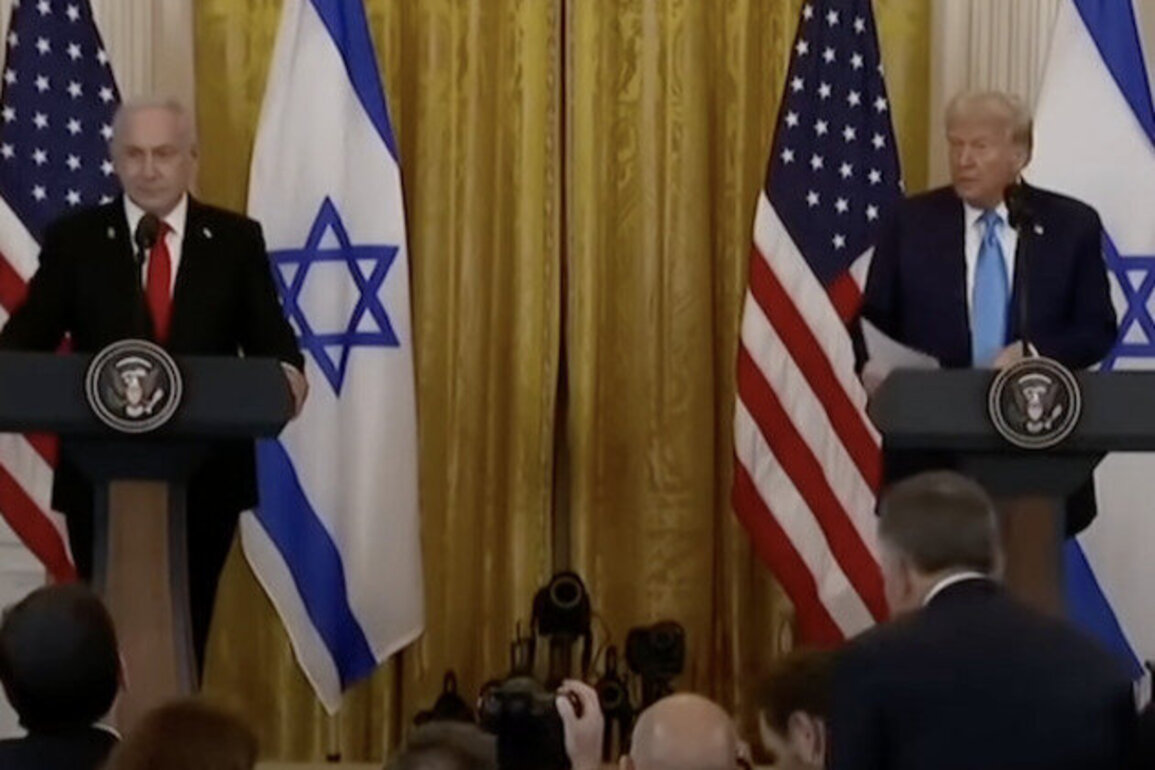
The executive order Trumpsignedin February 2025 declared the ICC had engaged in actions targeting America and its ally Israel, calling the arrest warrants baseless. The administration expanded sanctions in June, August, and December, each time targeting those involved in the Gaza investigation.
ICC judgesreportedlosing access to credit cards, having purchased e-books vanish from devices, and Amazon's Alexa stopping responses. One sanctioned judge told reporters she now appears on lists with terrorists and organized crime figures punishment for doing her job.
The Gaza reality
The stakes couldn't be higher because the underlying facts demand accountability. By January 2025, Gaza's Health Ministryreportedat least 46,645 Palestinians killed, with the vast majority being civilians. Independent research suggests far worse. A Lancetstudyestimated total violent deaths by October 2024 exceeded 70,000, with 59% being women, children, and the elderly.
A November 2025 Max Planck Institutestudyestimated total violent deaths between 100,000 and 126,000, of which 27% were children under 15. UNICEFreportedthat 74 children were killed in just the first week of 2025 alone.
The pattern of destruction meets definitions that scholars and institutions can no longer ignore. Multiple human rights groups and numerous international law scholars have recognised what's happening as genocide. UN satellite analysisfoundthat nearly 78% of all structures across Gaza had been destroyed.
The starvation component particularly demonstrates intent. For extended periods, humanitarian aid was blocked, with Israeli officials declaring that restricting aid was official policy. When food becomes a weapon against a population of over two million, including one million children, legal frameworks either mean something or they don't.
Western complicity
Trump's sanctions represent the most brazen effort to shield Israel from accountability, but complicity runs deeper. The U.S. has supported Israel's military campaign by continuing to supply billions in military aid throughout the genocide. The Trump Administrationsanctionedthree Palestinian human rights organisations Al-Haq, Al Mezan Centre for Human Rights, and the Palestinian Centre for Human Rights for documenting violations and asking the ICC to investigate, effectively criminalising the documentation of war crimes.
Britain applied similar pressure. Then-Foreign Secretary David Cameron privatelywarnedICC prosecutor Karim Khan in April 2024 that the UK would defund and withdraw from the ICC if it issued arrest warrants against Netanyahu and Gallant. Cameron told Khan that pursuing warrants would be like "dropping a hydrogen bomb."
U.S. Senator Lindsey GrahamthreatenedKhan with sanctions if he applied for the warrants, warning that "if they do this to Israel, we're next."
When powerful states actively work to prevent accountability for mass atrocities, they expose the conditional nature of their commitment to international law.
Power always shaped law
International law never existed independent of power. Law and power are constituted together and are therefore interdependent. When the balance of power shifts, the legal order shifts with it.
The post1945 system reflected American dominance and Western liberal values. As that power wanes and new centers emergeChina, India, the Global South the legal architecture must change. This isn't collapse; it's reconfiguration.
History proves the point. During the 1930s, the League of Nations failed when Nazi Germany rose to power, Italy invaded Ethiopia, and the USSR fought Finland. Yet international law survived, adapted, and emerged stronger after World War II.
What this means
TheHague Group, founded by Bolivia, Colombia, Cuba, Honduras, Malaysia, Namibia, Senegal, and South Africa in January 2025, responds to growing cracks in international legal enforcement and its politicised, selective application. These states seek to reshape international law around different principles than those that dominated the past 70 years.
If you're analysing global politics, understand that we're not witnessing the end of international law we're watching its transformation through the crucible of Gaza. But the Gaza genocide and Western efforts to prevent accountability reveal something more troubling. When powerful states systematically dismantle legal institutions investigating their allies' war crimes, they demonstrate that international law applies selectively based on political alignment rather than universal principles.
Trumpism, but make it Australian: One Nations migration fantasyBy borrowing Trumps rhetoric while ignoring Australian law, One Nation offers fear, fantasy and cruelty in place of workable migration policy.
Trump's sanctions, combined with continued weapons shipments to Israel, expose the hypocrisy at the heart of the current system. UN expertscalledthe sanctions an attack on global rule of law that undermines international justice. When the world's most powerful state treats international judges like criminals for investigating genocide, the pretence that law governs power becomes untenable.
What you're witnessing isn't the end of international law it's the painful birth of a multipolar legal order. Whether this transition happens through negotiation or conflict will determine if the coming decades bring greater justice or greater chaos.
The difference now is that Gaza has exposed this reality so starkly that denial becomes impossible. When thousands of children die while powerful states actively block accountability, the question becomes whether any international legal system can emerge that commands genuine respect rather than cynical compliance. The answer will shape not just Palestinian lives but the prospects for justice everywhere.
Hassan Elbialiis a political analyst and commentator specialising in international relations, geopolitical affairs, and the intersection of law and power.